Whether you own a static or touring caravan, keeping the interior tip-top and ensuring it’s a comfortable space to relax and enjoy is essential for the years of use for you and your family. One of the main aspects of a caravan’s interior that affects its enjoyment is the upholstery – it can have a significant impact on the overall appearance and comfort. In this article, we’ll discuss two primary methods for upholstering your caravan: DIY and using an upholstering service. We will also provide a list of frequently asked questions and answers to help steer you into the best choice for you.
DIY Caravan Upholstering
If you’re fairly hands-on and enjoy the satisfaction of completing a project on your own, DIY upholstering may be the right choice. It can also help if you’re on a budget and have some of the tools to hand. The process typically involves the following steps:
- Assessment: Examine the condition of your existing upholstery to determine the extent of wear and tear. This will help you decide whether you need a complete reupholstering job or just a few touch-ups.
- Material selection: Choose the appropriate fabric and other materials, such as foam and batting, that suit your preferences and the overall style of the caravan.
- Removal: Carefully remove the old upholstery, taking care not to damage the underlying structure.
- Template creation: Use the removed upholstery as a template to cut out new fabric and foam pieces.
- Assembly: Attach the new fabric and foam pieces to the existing structure, making sure to follow the correct order and alignment.
- Finishing touches: Add any necessary trims, buttons, or other decorative elements to complete the look.
When attempting a DIY upholstering project, it’s important to be aware of some of the following points:
- Properly measure and cut materials to avoid waste and ensure a precise fit. Remember, measure twice, cut once!
- Use suitable tools, such as a staple gun, fabric scissors, and a sewing machine, if required.
- Work in a well-ventilated area, as some materials, like foam and adhesives, may emit fumes.

Using a Caravan Upholstering Service
If you’re not comfortable taking on a DIY project or want a professional finish, using an upholstering service is a great option. Here’s what to expect when choosing this route:
- Research: Look for reputable upholsterers in your area and read reviews to find a reliable service provider.
- Consultation: Discuss your requirements and preferences with the upholsterer. They will help you choose the right materials and offer expert advice on design options.
- Quote: Obtain a quote for the service, including labour and material costs.
- Execution: The upholsterer will carry out the job, either at your location or in their workshop, depending on the arrangements made and how they work.
- Inspection: Once the work is complete, inspect the results to ensure the quality meets your expectations.
When using an upholstering service, keep the following in mind:
- Ask for a portfolio or examples of their previous work to gauge their expertise.
- Request a written contract or quote outlining the scope of work, materials, and costs.
- Inquire about any guarantees or warranties they offer on their work.

Choosing the Right Fabric and Material
Selecting the right fabric and material for your caravan upholstery is crucial to ensure durability, functionality, and aesthetics. Here we go through the types of fabrics available for caravan upholstery, their pros and cons, and their importance.
Polyester
This synthetic fabric is a popular choice for caravan upholstery due to its durability, affordability, and resistance to fading and mildew. It is also easy to clean and comes in various patterns and designs. However, polyester may not be as breathable or comfortable as some natural fabrics.
Vinyl
Vinyl is another synthetic material commonly used for caravan upholstery. It is water-resistant, easy to clean, and available in a wide range of colours and patterns. Vinyl is ideal for areas prone to spills or moisture, such as seating near dining tables. However, it may not be as breathable as other materials, and it can be prone to cracking over time if exposed to extreme temperature fluctuations.
Chenille
Chenille is a soft, plush fabric made from a combination of natural and synthetic fibres. It is a popular choice for a luxurious and comfortable feel. Chenille is durable and available in various designs, but it may not be as resistant to spills and stains as other options.
Acrylic
Acrylic is a lightweight synthetic fabric that is resistant to fading, mildew, and water. It is an excellent choice for outdoor cushions or seating areas exposed to sunlight. However, acrylic may not be as soft or comfortable as other materials and may be prone to pilling over time.
Cotton Blends
Cotton blended with synthetic fibres, such as polyester or acrylic, combines the breathability and comfort of cotton with the durability and stain resistance of synthetic materials. Cotton blends are available in various patterns and designs, making them a versatile option for caravan upholstery. However, they may not be as resistant to water and mildew as some synthetic fabrics.
Material Safety and Fire Retardant Materials
Upholstering a caravan with fire retardant materials is important for its occupants’ safety, mainly due to the limited space and proximity to potential fire sources. These materials resist ignition, slow burning, and self-extinguish, providing time for escape and minimising damage. Using fire retardant materials also ensures compliance with fire safety regulations in the UK.
What’s your choice?
When choosing fabric for your caravan upholstery, it’s essential to consider not only the practical aspects, such as durability, stain resistance and safety, but also the design and style. Obviously, you’ll also need to take into account the overall style and colour scheme of your caravan and select a fabric that complements and enhances the existing interior design. For many, this will be the most important factor.

Frequently Asked Questions
How much does it cost to reupholster a caravan?
The cost varies depending on the size of your caravan, the extent of the reupholstering job, and whether you choose DIY or a professional service. Expect to pay anywhere from a few hundred to several thousand pounds.
How long does it take to reupholster a caravan?
The time required depends on the size of the project and the method chosen. DIY projects can take a few days to a few weeks, while professional services could take anywhere from a few days to a month, depending on the availability and workload of the upholsterer.
Can I use any type of fabric for my caravan upholstery?
While you can use various fabrics, it’s essential to choose materials that are durable, easy to clean, and resistant to fading and mildew. Consider upholstery-grade fabrics, vinyl, or synthetic blends designed for use in caravans and motorhomes.
How often should I reupholster my caravan?
There’s no set rule for how often you should reupholster your caravan, as it largely depends on usage and the quality of materials. However, most caravan owners reupholster their interiors every 5 to 10 years, or when signs of wear and tear become apparent. Usually after this point the style of the caravan can seem dated, which prompts and renovation anyway.
Can I reupholster my caravan myself if I have no experience?
While it’s possible to learn the skills required for DIY reupholstering, it may be a challenging and time-consuming process without prior experience. If you’re unsure, it’s best to consult with a professional upholsterer or consider taking a class to learn the basics before attempting the project.
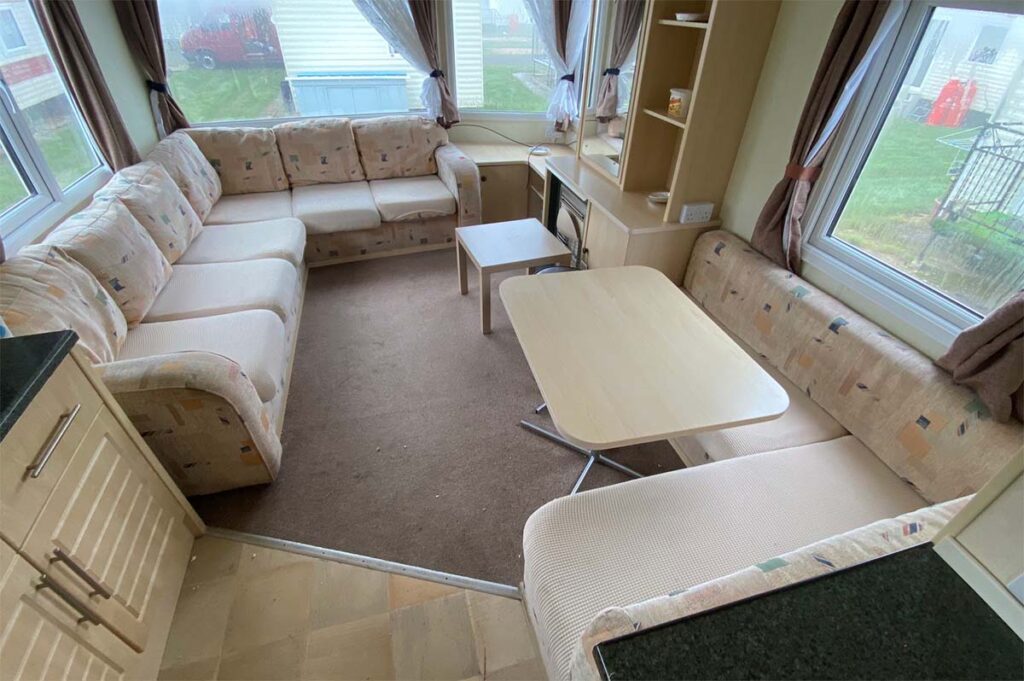
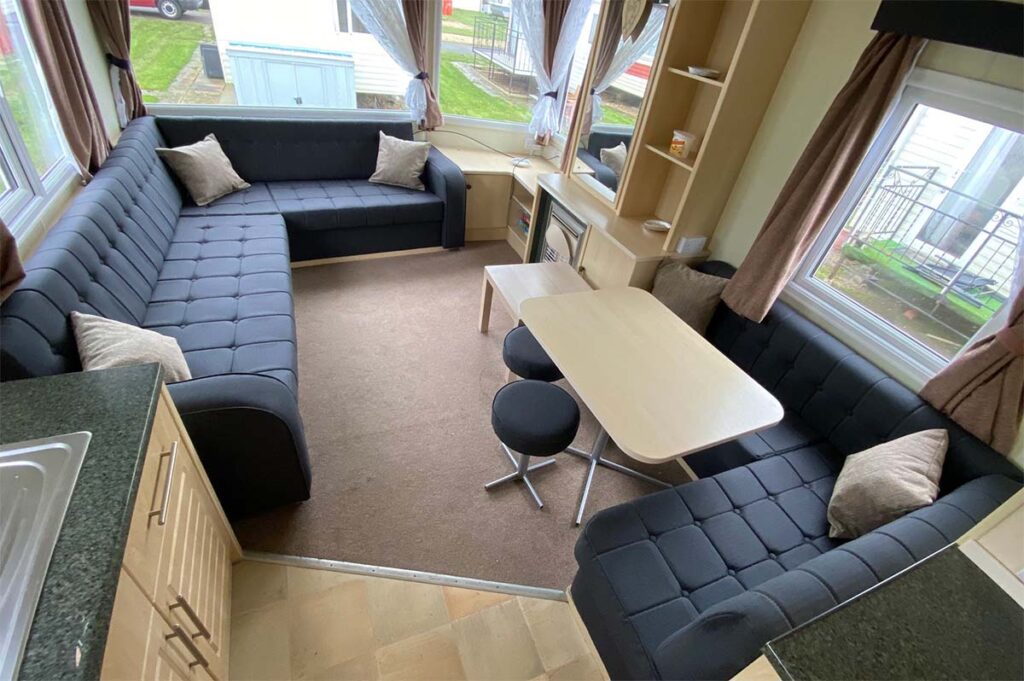
What sort of difference can reupholstering my caravan make?
The best way to highlight the difference is with some great before and after photos of the transformation that can occur.
Before a new upholstering job
After a new upholstering job
What the Professionals Think
We spoke to Gemma at Homefield Furnishings, a British family upholstering business based in Skegness to get a bit more insight into employing a professional upholsterer for your caravan if you’re not doing the DIY route:
“In my experience, I have seen many people attempt to do their upholstery themselves, it has taken them a lot more time and stress and also ends up costing a lot more money than it would what it would to commission a professional to do the work.
My advice is to save up the extra money and book it to have it done by a professional. The finish will last years and you will save yourself a lot of money and stress in the long run.”
Homefield Furnishings have also kindly provided some images of their work shown here and you can check out some more examples of their work on their Facebook page.
Conclusion
Reupholstering your caravan, whether static or touring, can make a significant improvement to its appearance and comfort, especially if the interior is feeling a little dated. And once you’ve re-upholstered the interior, maybe you need to look at improving the outside? Check out our guide to exterior caravan painting for more info on how you can tackle this next!
Choosing between DIY upholstering and using an upholstering service depends on your skills, preferences, and budget. It’s up to you to weigh the pros and cons of each method, but you can at least make a more informed decision that best suits your needs, and gives you that comfortable and stylish caravan interior for your future adventures!